Phone Verification in Lead Generation for Quality Leads
I
By Inleads Team
Sales & AI Expert
28th April 2026
5 min read
922 words
By Inleads Team
Sales & AI Expert
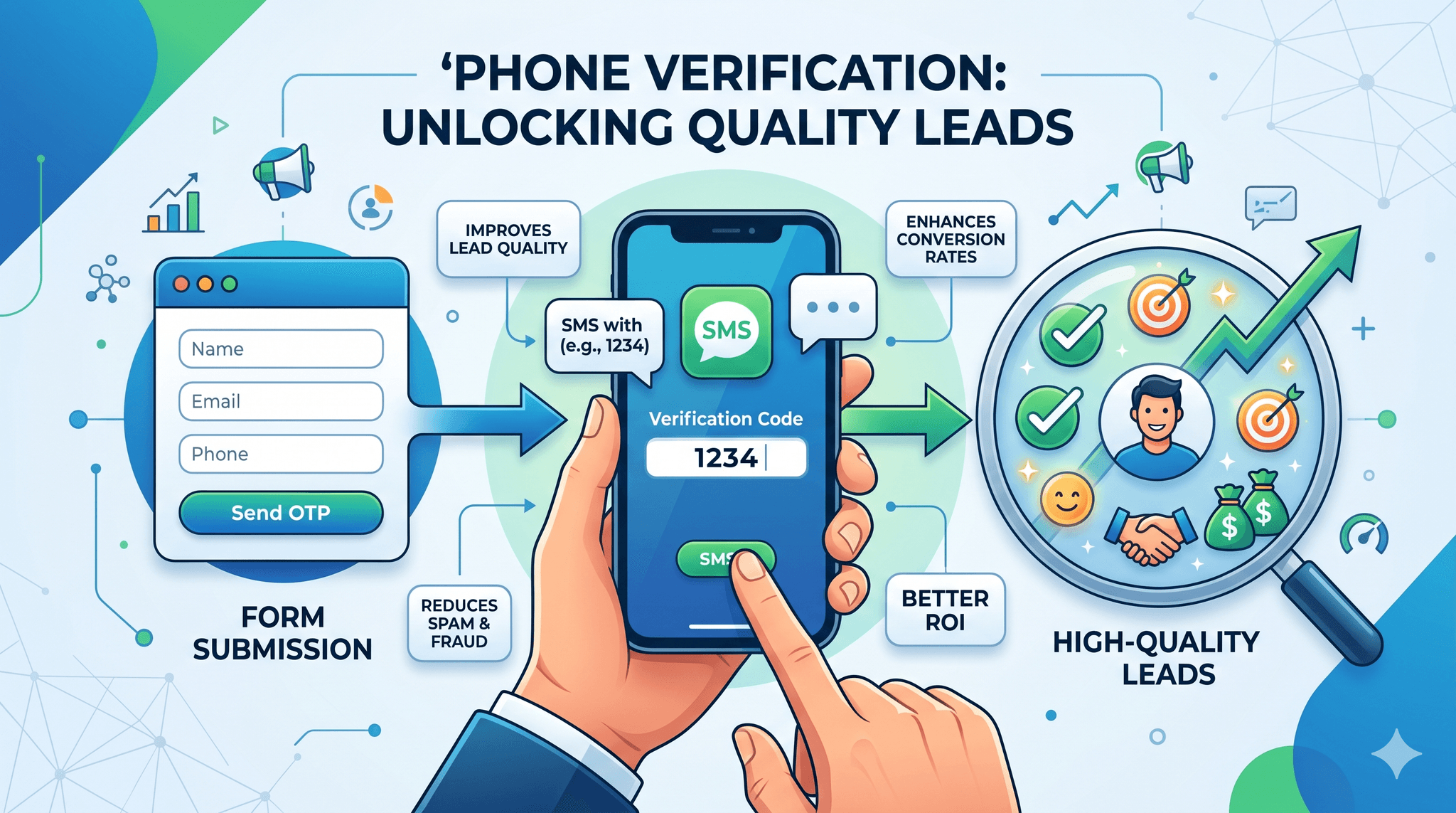
In today's digital marketing landscape, generating leads is only half the battle—the real challenge lies in ensuring those leads are genuine, reachable, and ready to convert. One of the most effective ways to improve lead quality is through phone verification in lead generation forms. This method helps businesses filter out fake or low-intent users while increasing the chances of meaningful engagement. In this blog, we'll explore what phone verification is, why it's important, how it works, and best practices to implement it effectively.
Phone verification is a process where users are required to confirm their mobile number while submitting a lead form. This is typically done through a One-Time Password (OTP) sent via SMS or an automated voice call. The user must enter the correct OTP to successfully submit the form. This extra step ensures that:
Without verification, users can easily enter fake or incorrect phone numbers. Phone verification ensures that only real users complete the form, significantly improving the quality of your leads.
Bots and spammers often flood forms with fake data. OTP-based phone verification acts as a barrier, preventing automated submissions and protecting your database.
Verified leads are more likely to respond to follow-ups, calls, or messages. This increases your chances of converting leads into paying customers.
When users see that your form includes verification, it signals that your business values security and authenticity. This can enhance your brand reputation.
If you're running ads on platforms like Facebook Ads or Google Ads, phone verification ensures your budget is spent on real prospects, not fake leads.
The process is simple and user-friendly:
The most common method where users receive a code via SMS.
An automated system calls the user and reads out the verification code.
Users give a missed call to a number, and their number gets verified automatically.
Verification codes are sent via WhatsApp for faster and more reliable delivery.
While phone verification offers many benefits, it's not without challenges:
Ensure the OTP process is quick and seamless. Avoid unnecessary delays.
Choose trusted SMS gateway providers to ensure high delivery rates.
Give users the option to resend OTP if they don't receive it.
Most users access forms via mobile, so ensure your form is mobile-friendly.
Guide users clearly on how to complete the verification process.
Instead of verifying every user, you can verify only high-value leads or suspicious entries.
Phone verification is especially useful in:
Several platforms offer phone verification services, including:
These tools provide APIs that can be easily integrated into your website or landing pages.
Integrating phone verification into your lead forms can transform your marketing strategy:
When combined with CRM systems and automation tools, verified leads can significantly boost your sales pipeline.
Phone verification in lead generation forms is no longer optional—it's essential for businesses that want high-quality leads and better conversion rates. While it may introduce a slight friction in the user journey, the long-term benefits far outweigh the drawbacks.
By implementing a well-optimized phone verification system, businesses can ensure that every lead is genuine, reachable, and valuable. Whether you're running campaigns on Facebook Ads or Google Ads, this simple step can make a significant difference in your overall marketing performance.
Discover more insights about AI sales tools and analytics